SmileFy AI Automates Smile Analysis and 3D Design, Dentists Stay in Control
Press release · News provided by SmileFy
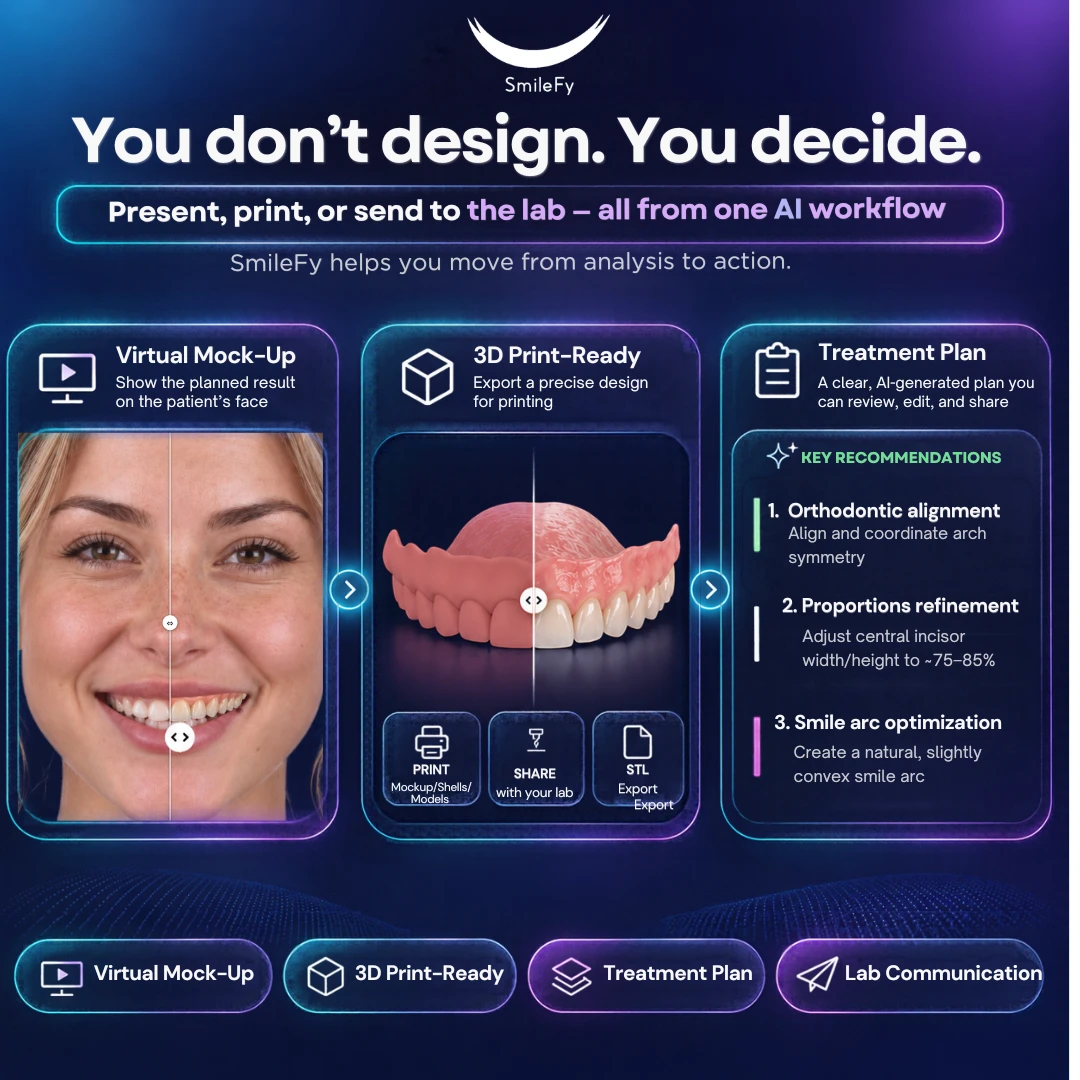
SmileFy introduces its new AI Smile Designer, automating smile analysis and facially guided 3D design from patient photos and intraoral scans. AI suggests treatment options and creates virtual mock-ups and print-ready designs, reducing manual CAD work while dentists retain full clinical control over treatment decisions.
SmileFy's New AI Smile Designer Does the Smile Analysis and Design Work on the Intraoral Scan, So Dentists Can Focus on Clinical Decisions
Not another software tool to install and learn: the SmileFy AI Smile Designer analyzes the face and the intraoral scan, builds a facially guided smile design directly on the scan and supports every clinical decision the dentist makes.
Fort Lauderdale — November 10, 2026 — SmileFy, used by dental professionals in more than 60 countries, today introduced the SmileFy AI Smile Designer, an AI agent that analyzes and designs the case for the dentist. From one facial photo and one intraoral (IO) scan, the AI Smile Designer measures more than a dozen facial, dentofacial, dental and gingival parameters in minutes, proposes treatment options tooth by tooth, and builds a facially guided smile design directly on the scan. The dentist reviews the analysis and the design and makes all clinical and treatment decisions.
Not another software tool. An AI Smile Designer that does the work.
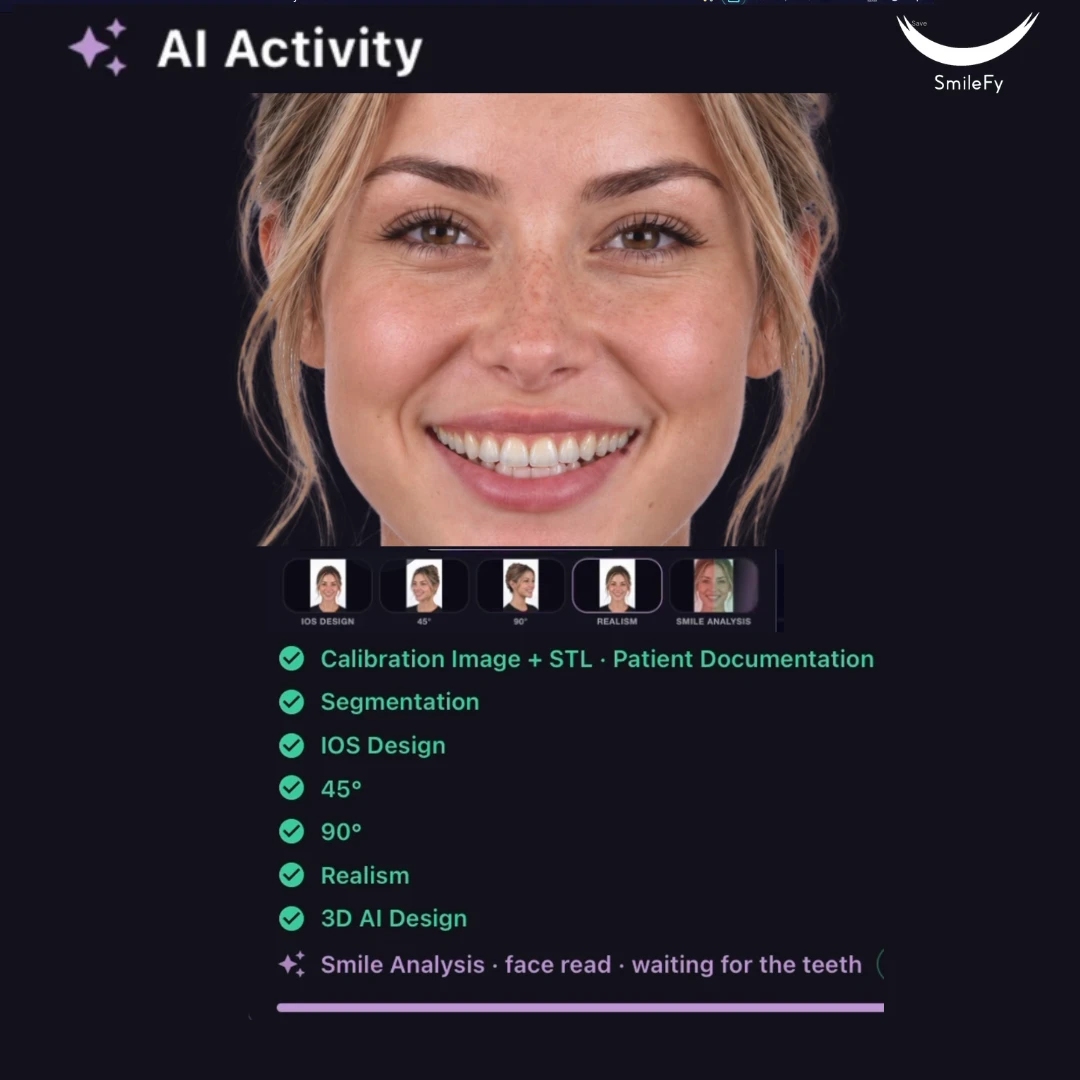
Conventional smile design software asks dentists to become CAD operators: install it, learn it and build every design by hand. The SmileFy AI Smile Designer turns that around. After upload, its AI Activity panel completes each step of the case on its own and checks it off: calibration of the photo and STL, segmentation, IOS design, 45° and 90° views, realism, 3D AI design and the facial smile analysis.
There is no technician in the loop and no queue. A case uploaded between patients is ready before the next consultation, and one uploaded at night is ready in the morning. There is nothing to install, no learning curve and no CAD expertise required.
Why simulation alone falls short
Most AI smile simulations are built from a photo alone. A photo-only simulation is a 2D image edit. It contains no tooth setup or measurements, and it can't account for the arch, tooth positions, occlusion or gingival architecture beneath the lips. As a result, simulations can show patients results their anatomy won't support, creating an expectation gap between the smile they approve and the treatment that follows.
The AI Smile Designer replaces the picture-first approach with an analysis-first workflow grounded in the patient's own anatomy.
How the SmileFy AI Smile Designer works
Capture: The dentist uploads a facial photo and an intraoral scan.
Analyze: The AI Smile Designer runs a complete esthetic checklist and flags every value that is out of range.
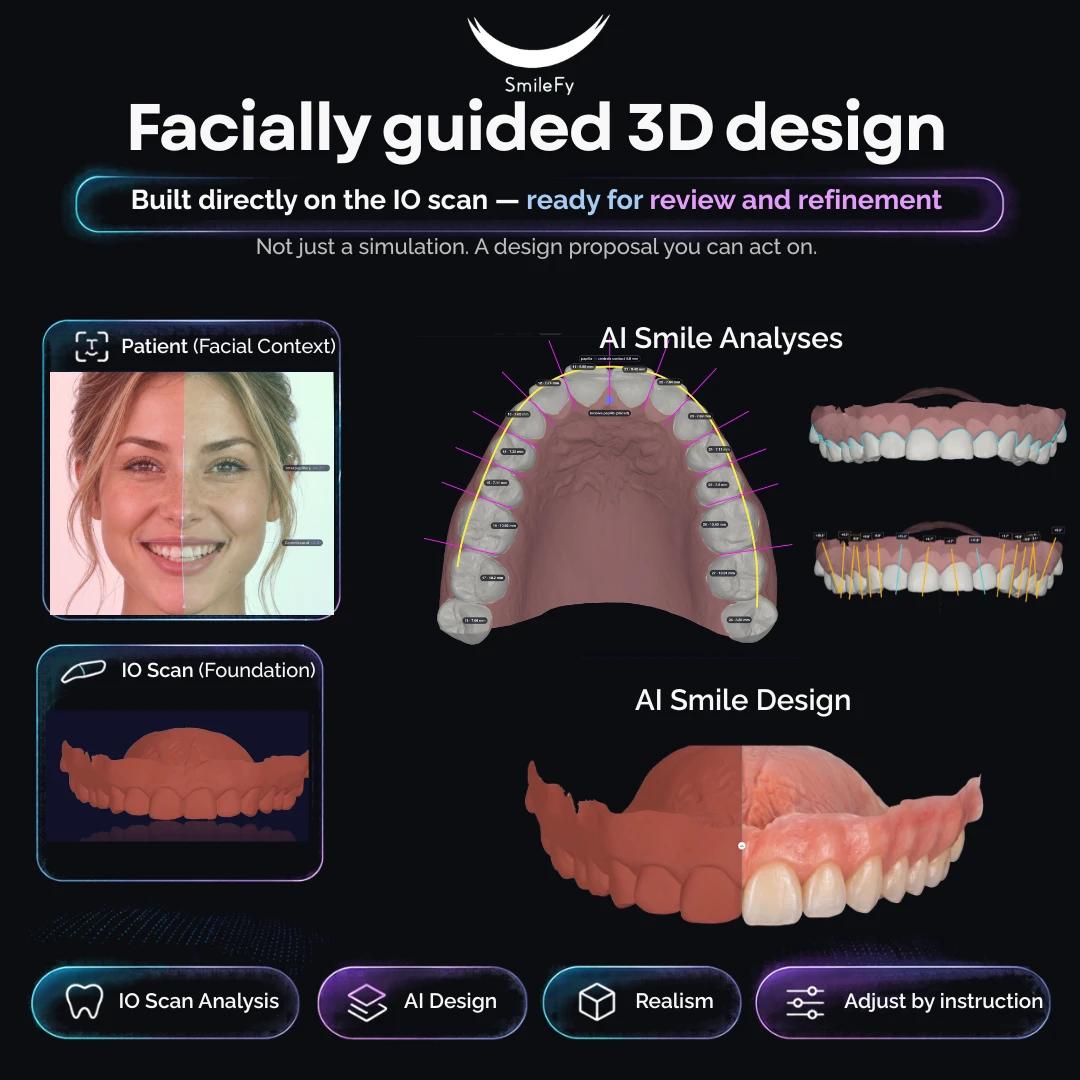
Facial analysis: Facial Flow, Facial Symmetry and AI Facial Thirds measure the facial midline, horizontal planes, side-to-side symmetry and facial thirds, and set a target incisal edge.
Dental and gingival analysis on the scan: AI Axial Angulation, AI Occlusal Curve and Teeth alignment measure each tooth's crown axis and rotation, plus smile arc, crowding and spacing. Teeth size and the gingival panels check tooth proportions, gingival display and symmetry.
Plan: The AI Summary turns the findings into treatment options by tooth, such as orthodontic alignment, enamel reshaping and composite or ceramic veneers, with target proportions. It also notes findings within normal range that need no treatment.
Design: The AI Smile Designer creates a facially guided smile design directly on the IO scan, with each design choice following the analysis findings. The dentist can review and adjust it, then use it for any of the three outcomes below.
Decide: The dentist reviews the findings and the design and makes every clinical and treatment decision, including treatment path, function and occlusion. The dentist tells the AI Smile Assistant what to change, and the AI Smile Designer adjusts the design instantly.
Three outcomes from every case
Virtual mockup: The proposed smile design is shown instantly on the patient's own face, so patients see their new smile at the first visit and can decide with confidence.
3D print-ready models in-office: The approved design exports as print-ready 3D mockups, shells, wax-ups, temporaries or veneers, ready for the practice's own 3D printer.
Clearer communication with the lab: Dentist and technician start from the same numbers, which means fewer calls and fewer surprises at try-in.
Built on classic smile design science and 30 years of expertise
Every parameter the AI Smile Designer measures is grounded in classic, published smile design research. The AI Smile Designer puts that science, together with the 30 years of smile design expertise and research of leading clinicians and SmileFy's founders, to work on every case, consistently and in minutes. The dentist stays in control of every clinical decision.
Main benefits for dental clinics
More chair time for what matters: The AI Smile Designer takes over measurements, calibration and design, so clinicians spend their time on diagnosis, the procedure and the patient.
Higher case acceptance: Patients see their new smile and clear treatment options at the first visit.
More cases, same team: Clinics can handle more esthetic cases without adding a designer, a CAD technician or software training.
Lower costs, fewer appointments: Smile design no longer needs to be outsourced to an external designer or lab, saving design fees and waiting time. With the analysis, design and virtual mockup ready at the consultation, and print-ready models produced in-office, clinics can cut extra planning and try-in appointments from the treatment path.
Consistent quality on every case: The same complete esthetic checklist runs on every case, regardless of who uploads it.
Leadership perspective
> “Esthetic dentistry has never lacked science. What it has lacked is the time to apply that science to every case,” said Ralph Georg, co-founder and CEO of SmileFy. “We built the AI Smile Designer to change who does the work, not who makes the decisions. Now every clinic, from a solo practice to a multi-location group, can offer analysis-driven smile design on every case without adding staff or learning CAD.”
Availability
The SmileFy AI Smile Designer, with IO-scan-based smile analysis and design, is available now and runs 24/7. It's cloud-based and runs in a web browser on any modern device, with no separate installation. A stable internet connection is all that's needed.
How this post will look when shared
smilefy.com
SmileFy AI Automates Smile Analysis & 3D Design | Press Release
SmileFy introduces its AI Smile Designer: automated smile analysis and facially guided 3D design from photos…