The Appointment You Don't Need: Replace the Mockup Visit, Start Treatment Sooner
Clinical workflow
What if the second appointment delivered treatment instead of an unbilled mockup?
In most aesthetic cases, that visit has a single purpose: showing the patient what their new smile could look like. Nothing is prepared and nothing is bonded. It is the mockup or try-in appointment, and it exists because the patient needs to see the result before committing.
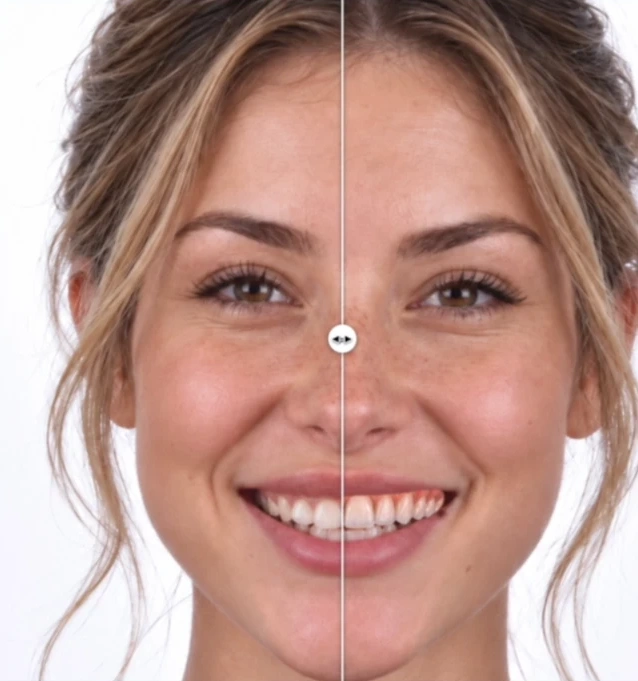
But what if a virtual mockup could do the same job? Using the patient's intraoral scan and their own facial photo, you can design the proposed smile and show it on their face, right at the first appointment. The patient sees what a physical mockup would show them, without a second visit.
That changes two things. First, the patient can say yes on day one, while they are still in the chair and still excited. Second, the slot you had reserved for "showing" becomes the appointment where treatment begins, and for many direct composite cases, where it is finished.
This article covers what the mockup visit really costs, how an AI virtual mockup replaces it in many cases, when a physical try-in is still worth doing (and how to print it in-office the same day), and how to restructure the pathway so the second appointment becomes treatment.

What the mockup visit actually costs
The physical mockup earned its place. It lets patients see and feel their future smile before a tooth is touched, and gives the clinician a blueprint for preparation. The problem is the route to it:
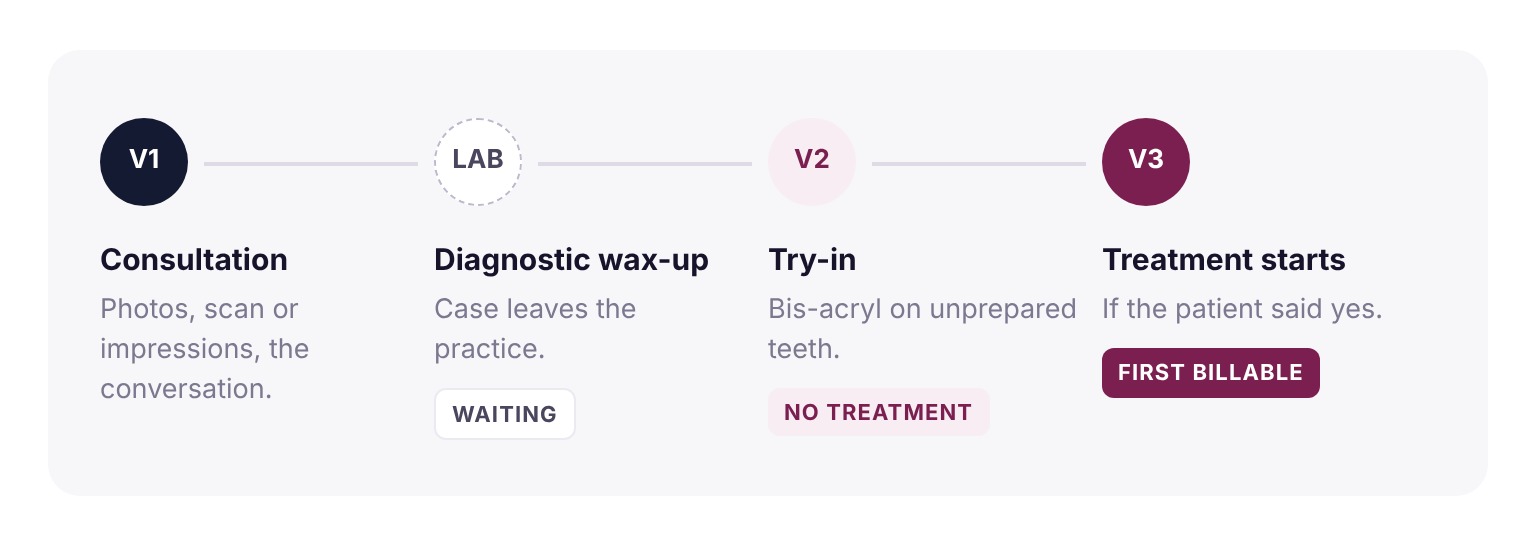
Visit 1, consultation: photos, scan or impressions, a conversation about what the patient wants and, in some practices, a smile simulation showing how the new smile could look.
Lab wax-up: the case goes out for a diagnostic wax-up. In one university lab audit, only 57.8% of diagnostic wax-ups were completed within 3 working days (Annals of Dentistry, University of Malaya), before shipping.
Visit 2, the try-in: a silicone index is made from the wax-up and bis-acryl is transferred onto the unprepared teeth. The patient looks, asks for changes or goes home to think.
Visit 3, treatment starts if the patient said yes, and after another lab cycle if they asked for changes.
Educators have long warned that a wax-up made before all input is gathered may need significant changes later, with a remake and extra lab cost (Spear Education).
An illustrative calculation
Plug in your own numbers; these are assumptions, not benchmarks. Take a practice with 6 aesthetic consultations a month that each get a mockup visit of 45 minutes, and a 6-unit printed lab wax-up per case at Glidewell's listed $26 per unit plus shipping (Glidewell):
- Cost of the mockup visit
- Chair time with no treatment delivered
- Per month
- 4.5 hours
- Per year
- 54 hours
- Cost of the mockup visit
- Lab wax-up fees, excluding shipping
- Per month
- $936
- Per year
- $11,232
- Cost of the mockup visit
- Days added before treatment starts
- Per month
- Lab turnaround + scheduling
- Per year
- Every case
- Cost of the mockup visit
- First treatment appointment
- Per month
- One visit later
- Per year
- Every accepted case
| Cost of the mockup visit | Per month | Per year |
|---|---|---|
| Chair time with no treatment delivered | 4.5 hours | 54 hours |
| Lab wax-up fees, excluding shipping | $936 | $11,232 |
| Days added before treatment starts | Lab turnaround + scheduling | Every case |
| First treatment appointment | One visit later | Every accepted case |
The chair hours and lab fees are the visible part, and the lab figure is conservative: $26 per unit is a low-end printed price, so use your own lab's fee. The larger cost is the delay: every case spends days or weeks between "I'm interested" and "let's start," and that is where cases go quiet.
Why the first visit is the best moment to decide
A patient who has just seen their future smile is at their most motivated. A week later, the same patient has a budget conversation at home, a busy calendar and a decision they can postpone. The traditional pathway asks for the decision at the worst possible time: after the gap.
Showing the result at the first visit changes that. In a five-patient study of digitally planned aligner and veneer cases, patients rated AI-generated smile previews more favorably than 2D designs and said the digital tools helped them understand and accept treatment (Tallarico and Lumbau, University of Sassari). The goal is not pressure. It is giving the patient everything they need to decide while they are still with you.
The AI virtual mockup with SmileFy
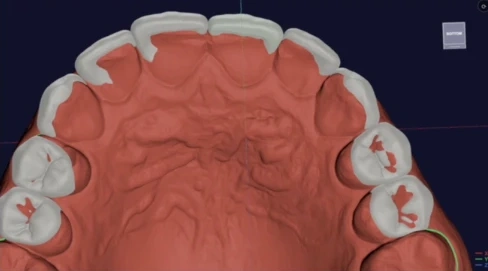
SmileFy builds a 3D smile design from the patient's intraoral scan during the consultation. You upload the patient's photo and intraoral scans, and SmileFy AI calibrates the files, analyzes the smile and generates a smile analysis that helps you explain the reasoning behind the treatment. It then creates a facially guided design on the intraoral scan, with natural tooth colors, shown on the patient's own face.
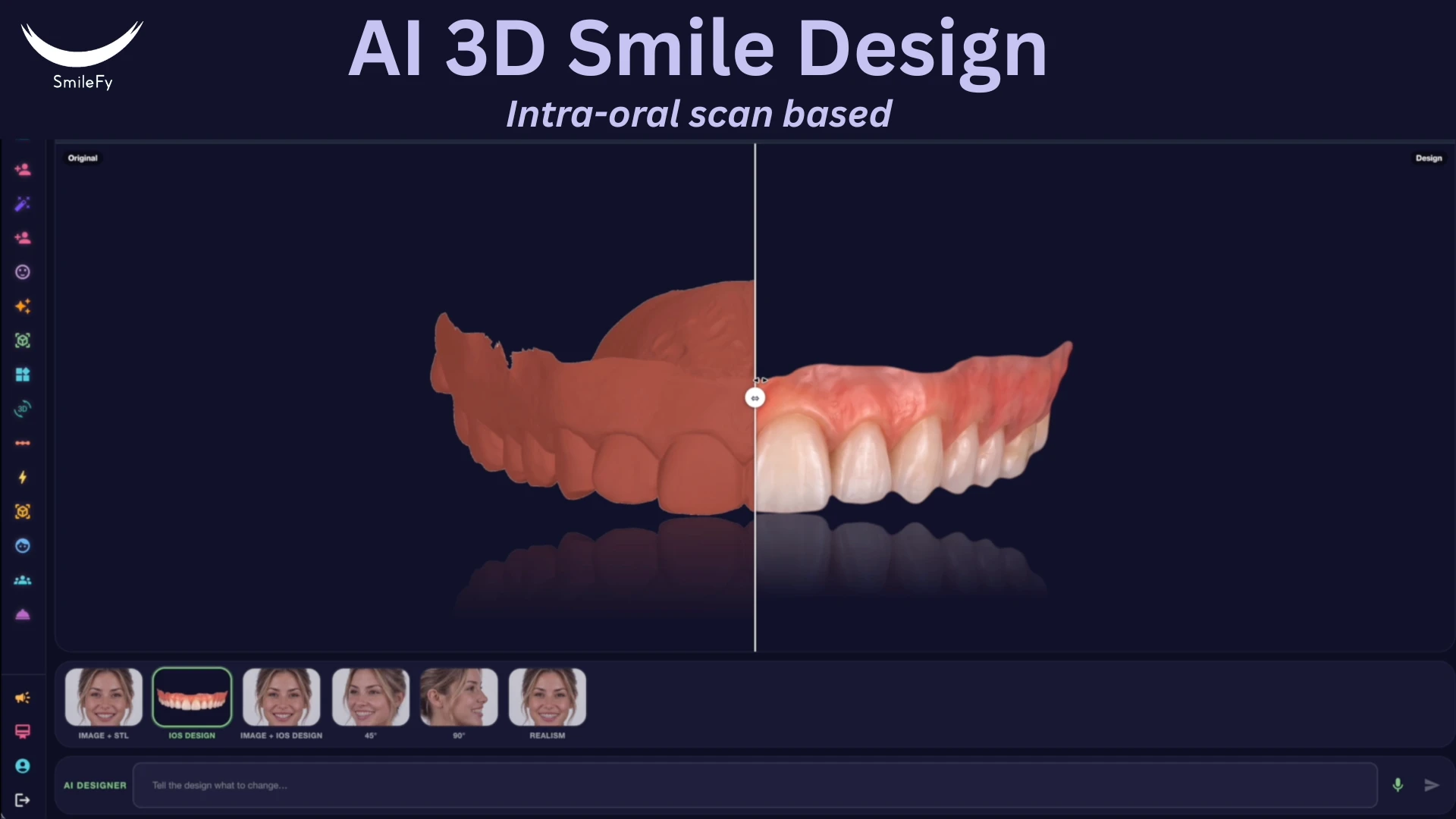
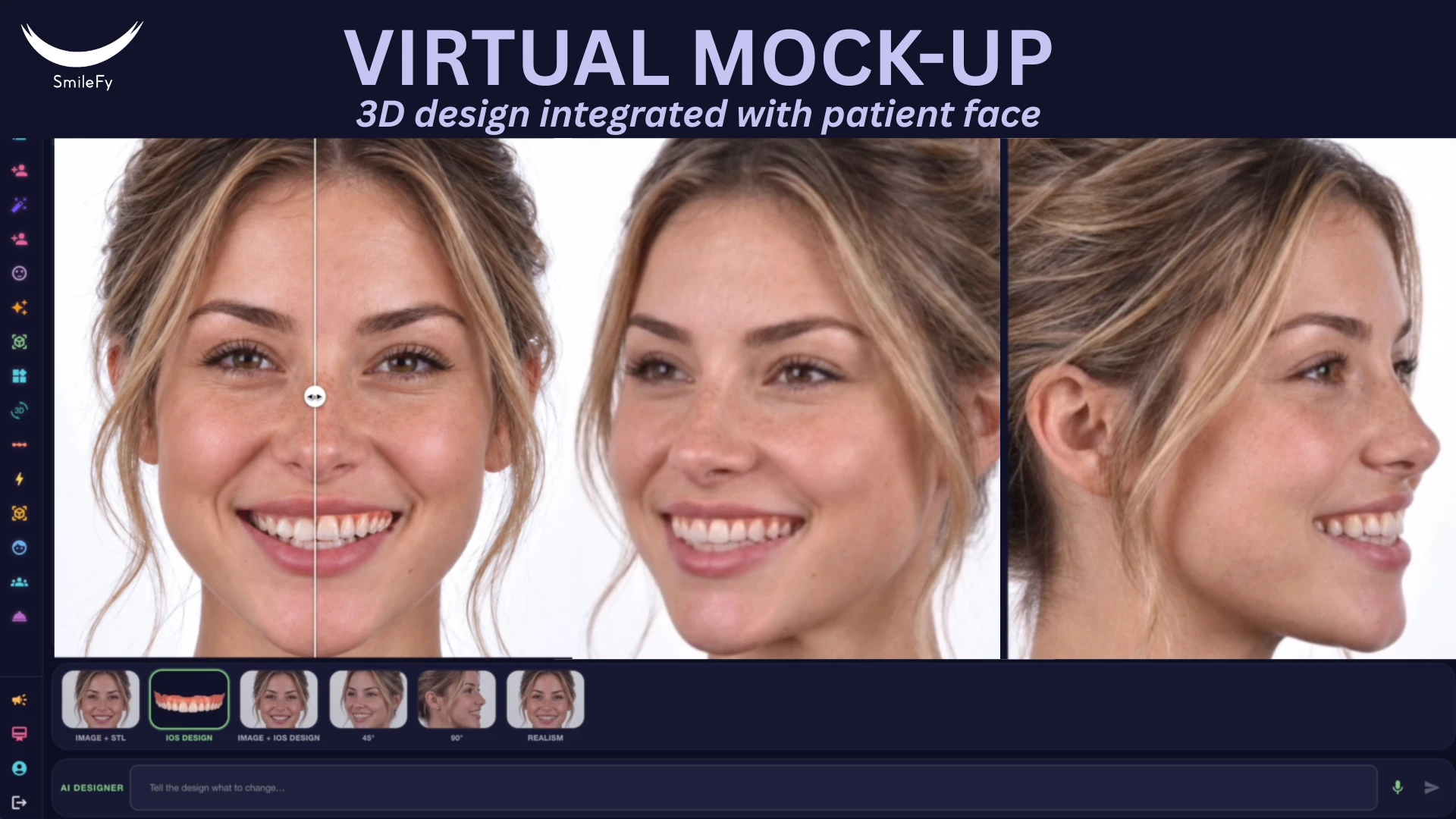
From there, you adjust the design by giving clinical instructions, and add an AI video to support your presentation. The 3D mockup design is ready in a few minutes (Dental Products Report), so you can present it to the patient and share it with your lab for manufacturing.
Three properties make it a replacement for the try-in visit:
Deliverable — because it is intraoral scan-based. The design sits on the patient's real teeth and arch, not on a 2D photo. SmileFy can also bring in CBCT and 3D face scans (Dental Products Report). What the patient approves is the same 3D design you print or send to the lab.
Predictable — because it is one design. The try-in, the temporaries and the final restorations all come from the file the patient said yes to.
Realistic — because it is clinically guided. The AI analyzes facial flow, tooth proportions and smile design rules to produce a natural-looking result (Orthodontic Products), and the dentist adjusts it to the treatment options. Patients see their own smile: not a template or a Photoshop illusion, but a preview of treatment you can deliver.
The patient sees the 3D design as their new smile, on their own face, and you adjust it live. SmileFy AVA then creates a short video of the patient with the proposed smile (Orthodontic Products), which they can watch again at home before treatment starts.
For many cases, this covers what the try-in visit was for: aesthetic approval, a design that can be produced, and a blueprint for treatment and lab communication.
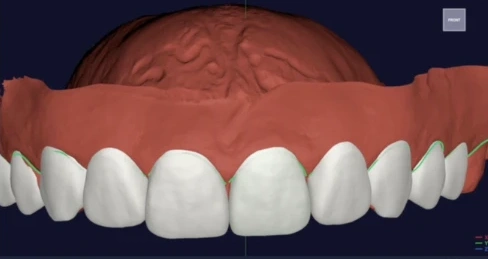
Typical examples are composite restorations, shape and length corrections, veneer and other anterior restoration cases where the patient mainly wants to see the result, and aligner consultations.
See your next consultation end in a yes. Design your first case with a SmileFy consultant.
When you still want a physical try-in: print it in-office, same visit
Some cases deserve a mockup in the mouth. A physical try-in is still the right call when:
Phonetics and lip support need to be tested, not just appearance
Several clinicians need to agree on a prep plan before reduction
In restorative cases, the try-in is used to check function and for clinical validation, not just appearance
The patient needs to feel the result to decide
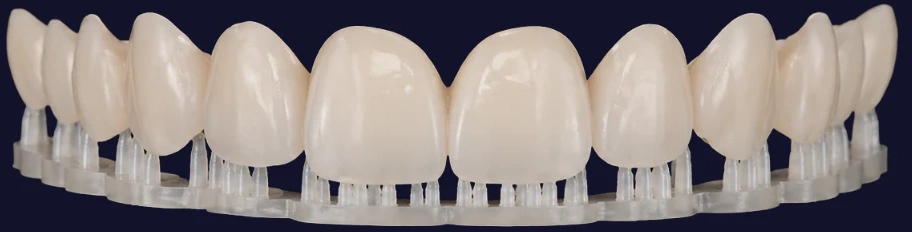
That no longer requires a second visit. The approved SmileFy design exports as print-ready mockups, shells, composite veneer templates and temporary models (Dental Products Report). With an in-office printer, you print the model or shell, load bis-acryl and seat the mockup within the same appointment. Without one, the same file goes to your lab, with no wax-up step.
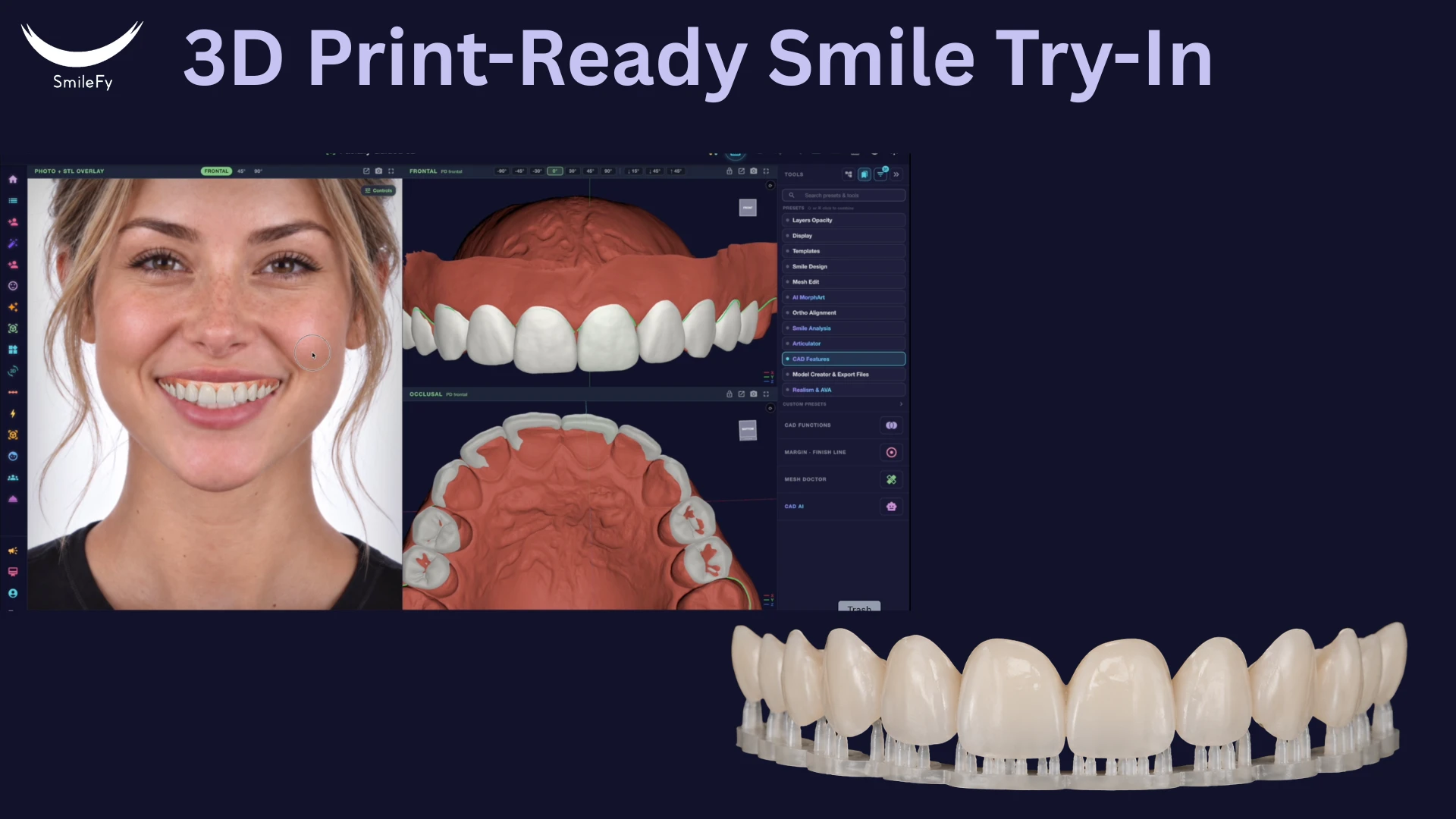
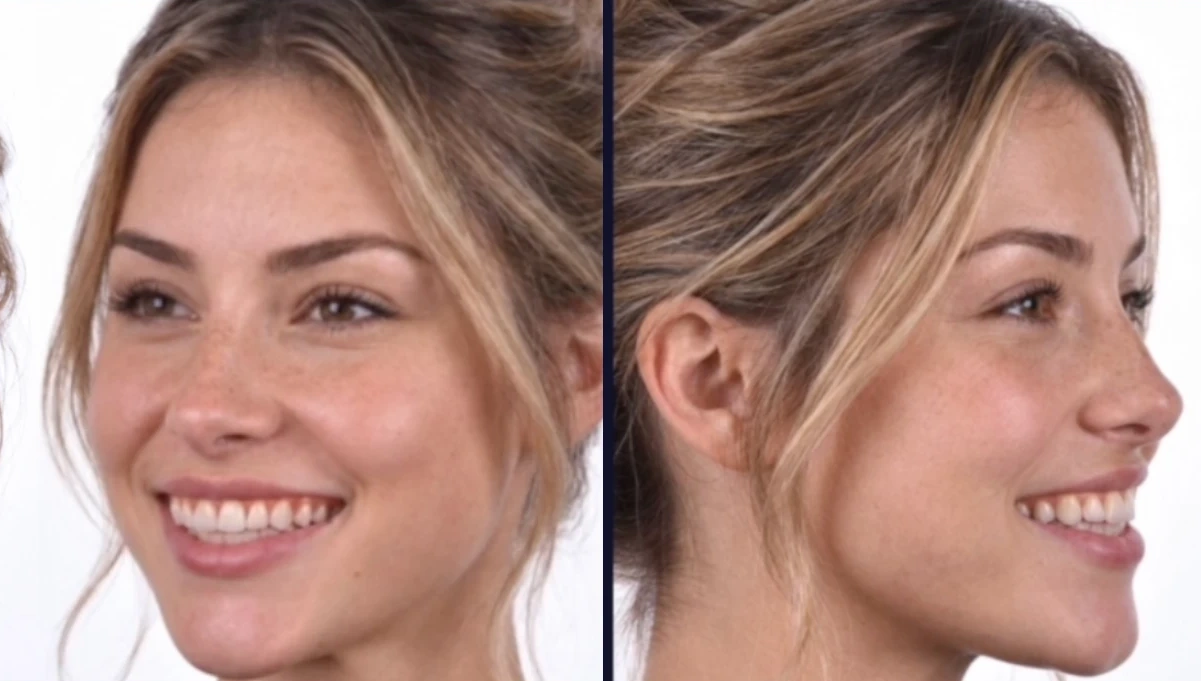
1. Approve: review the virtual mockup with the patient.
2. Export: export the approved 3D design for printing.
3. Print: manufacture the model or shell in-office.
4. Seat: load bis-acryl and seat the physical mockup when clinical validation is needed.
Make visit 2 the treatment visit
Saving the mockup visit only pays off if you use the freed appointment well. The pathway becomes:
Visit 1: consult, design, decide.
1. Take the intraoral scan and a smiling photo.
2. Generate the AI design while you review the history and clinical findings.
3. Present the virtual mockup: the 3D design on the patient's face and the AVA video. Adjust live.
4. If the case needs a physical try-in, 3D print it and seat it in the same appointment.
5. Agree the plan and book visit 2 as a treatment appointment, not a review.
Visit 2: treatment, from the approved design.
Indirect cases (veneers, crowns): prepare through the approved design and seat temporaries printed from the same file, so the patient leaves wearing the smile they approved.
Direct composite cases: use a printed composite veneer template to transfer the approved design, and in many cases complete the treatment in this visit.
Lab cases: the lab receives the approved 3D design, not a written description, so there is no gap between what was promised and what is made.
The patient makes two trips instead of three or more, the first treatment appointment arrives sooner, and the result follows the digital plan built on the intraoral scan from the start.
Trade-offs and clinical judgment
A screen cannot test phonetics or lip support. When those matter, print the try-in. That is a reason to print, not a reason to add a visit.
If you already try in and prep in one appointment, the saving is the lab cycle and the wait, not a visit. The virtual mockup still moves the decision to the consultation, so the patient arrives at the prep appointment already committed.
Function comes first. Occlusion, periodontal health and restorative space must be assessed clinically before any design is shown to the patient as achievable.
The design is a proposal. Explain what the final material, shade and preparation can actually achieve.
The lab still matters. For complex full-mouth rehabilitations, an experienced technician's eye and excellent restoration manufacturing remain valuable. A virtual mockup does not replace that collaboration; it gives the lab an approved starting point.
One less appointment, one step closer to treatment
Most practices already have what this pathway needs: Formlabs data puts intraoral scanner use at more than 60% of US practices, with chairside 3D printing at around 15% (TCT Magazine). The scan you take at the consultation is enough for a virtual mockup; the printer is optional.
The question is simply what your second appointment is for. If it is for showing, it can move into the first. Then the second appointment can do what patients came for: treatment.
Try it on your next consultation. Book a personal walkthrough with a SmileFy consultant, complete the design of your first case together, and get 7 days of unlimited free access.
Frequently asked questions
What is a virtual mockup in dentistry?
A virtual mockup is a digital preview of the proposed smile. With SmileFy, it is designed on the patient's intraoral scan and shown on their own facial photo, so the patient sees the result before any tooth is touched.
Can a virtual mockup replace the physical try-in appointment?
In many aesthetic cases, yes. Composite restorations, shape and length corrections, anterior veneer cases and aligner consultations can often be approved from the virtual mockup at the first visit. When phonetics, lip support or function must be tested, a physical try-in is still the right call.
Do I need a 3D printer to use an AI virtual mockup?
No. The intraoral scan taken at the consultation is enough for a virtual mockup. A chairside printer is optional and lets you print a physical mockup in the same appointment when a case needs one.
How long does it take to create the AI smile design?
The SmileFy 3D mockup design is ready in a few minutes, so it can be presented during the consultation while the patient is still in the chair.
How does a virtual mockup improve case acceptance?
Patients are most motivated right after they see their future smile. Showing the result at the first visit lets them decide while they are still with you, instead of after a gap of days or weeks.
Make your next second appointment a treatment appointment
Show the result at the consultation, get the yes in the chair, and start treatment one visit sooner.
7 days · unlimited · free
Book a personal walkthrough with a SmileFy consultant
Complete the design of your first case together
Get 7 days of unlimited free access
Sources
1. Annals of Dentistry, University of Malaya: Turnaround time audit (2015)
2. Spear Education: When to complete a diagnostic wax-up
3. Glidewell: 3D printed diagnostic wax-ups
4. Tallarico and Lumbau: Patients' perceptions after digitally driven smile creation
5. Dental Products Report: SmileFy 4.0
6. Dental Products Report: SmileFy 3D Smile Design
7. Orthodontic Products: SmileFy ONE-CLICK AI Smile Design
8. TCT Magazine: Chairside dental AM, from all sides (June 2026)
How this post will look when shared
smilefy.com
The Appointment You Don't Need: Replace the Mockup Visit, Start Treatment Sooner
The mockup visit exists to show patients their future smile. An AI virtual mockup does that at the first appo…